'%20d='M90.5567%20248.944C95.5899%20251.555%2099.8107%20253.779%20105.286%20255.486C102.161%20256.576%2094.123%20252.252%2091.1583%20250.759C90.3555%20250.355%2090.8095%20249.949%2090.5567%20248.944Z'/%3e%3cpath%20d='M47.4897%20178.344C47.2115%20177.223%2047.0411%20177.343%2047.4372%20176.518C48.366%20175.948%2048.8764%20175.766%2049.8634%20176.32L50.0055%20176.642C49.2117%20176.806%2048.7615%20176.886%2047.9918%20177.193C47.7124%20177.733%2047.7106%20177.702%2047.6856%20178.304L47.4897%20178.344Z'/%3e%3c/svg%3e)
01
Digital Twin
Digital twin work for terminal planning and operations.
Model terminal operations, constraints, and loading scenarios so teams can test decisions before they reach the yard.
Talks to
PlanningTASInventoryKPI
1
2
3
4
What we cover
A focused scope before implementation starts.
02
Real-time data ingestion & object library
03
Scenario modeling & KPI projection
04
OptiLoad™ R&D feasibility framing
Architecture
Engineered architecture, end-to-end.
Layer 4
ERP
Layer 3
TAS
Layer 2
SCADA / HMI
Layer 1
PLC / VFD / Safety PLC
Layer 0
Field equipment
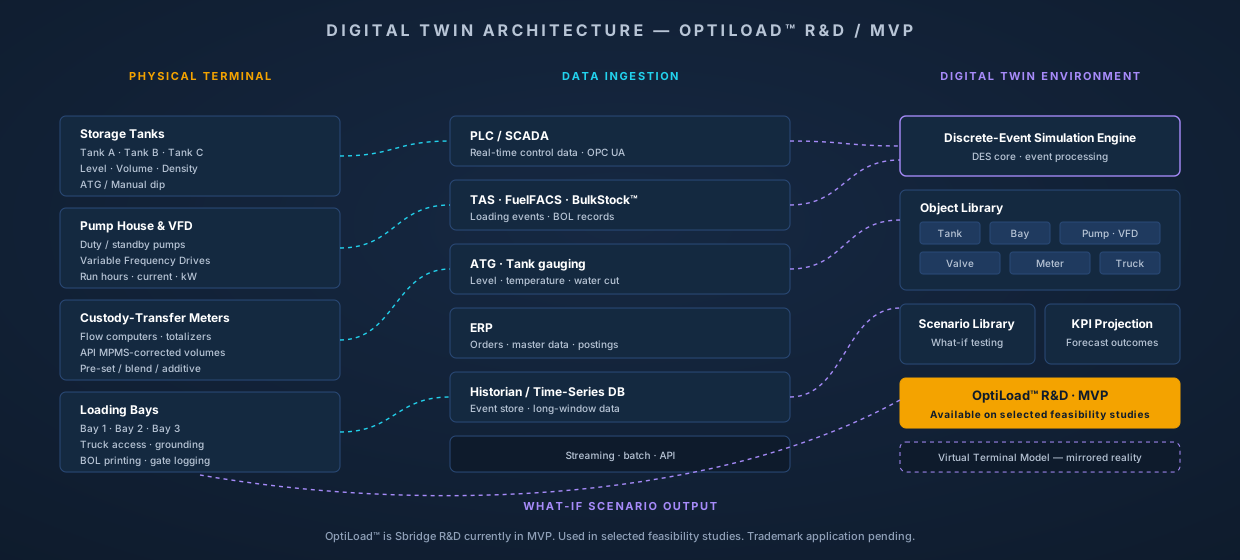
OptiLoad™ — R&D, MVP
OptiLoad™ — Sbridge's Digital Twin R&D platform (currently MVP).
OptiLoad™ is our in-house R&D product applying discrete-event simulation to petroleum terminal operations. It models tanks, bays, pumps, meters, valves, schedules and demand profiles as a living system — letting operators test “what-if” scenarios before committing physical change. OptiLoad™ is currently an MVP and is not yet commercially released. We use it on selected client engagements as a feasibility-study tool, and we publish notes from its development on our Insights blog.
Scope and outcomes
What we deliver — and what it changes.
Technical work behind a useful model.
Show all 9 itemsShow less
Representative scenarios
From projects we have participated in.
West African coastal terminal
Challenge
Solution
Outcome
Southern African inland depot
Challenge
Solution
Outcome
Multi-product tank farm
Challenge
Solution
Outcome
FAQ
Questions to settle before scope hardens.
Talk to us
Map your operating chain. We will show you where time, money, and traceability are leaking.
A focused discovery call gives you a practical view of the systems, field signals, and operating handoffs that deserve attention first.
We reply within two business days.