'%20d='M90.5567%20248.944C95.5899%20251.555%2099.8107%20253.779%20105.286%20255.486C102.161%20256.576%2094.123%20252.252%2091.1583%20250.759C90.3555%20250.355%2090.8095%20249.949%2090.5567%20248.944Z'/%3e%3cpath%20d='M47.4897%20178.344C47.2115%20177.223%2047.0411%20177.343%2047.4372%20176.518C48.366%20175.948%2048.8764%20175.766%2049.8634%20176.32L50.0055%20176.642C49.2117%20176.806%2048.7615%20176.886%2047.9918%20177.193C47.7124%20177.733%2047.7106%20177.702%2047.6856%20178.304L47.4897%20178.344Z'/%3e%3c/svg%3e)
May 10, 2026 · 7 min read
The full operating chain: ERP order to billing trigger explained
A modern terminal is a chain, not a stack. This note follows one order from business system to loading bay and back to finance.
By the Sbridge team
Start with the business transaction
A customer order begins in the ERP. It becomes useful at the terminal only when customer, product, vehicle, driver, tank, bay, delivery, and authorization data are aligned with the TAS or stock-management layer.
This is where many projects lose traceability. If the business order and terminal authorization do not share stable references, reconciliation becomes manual work at the end of the shift or month.
Turn authorization into controlled execution
The TAS verifies the driver, vehicle, product, and bay. Access control confirms entry. PLCs and VFDs control pumps, valves, meters, presets, and loading logic. The Safety PLC stays independent and protects against critical conditions.
The control layer should receive clear authorization and return clear evidence. Operators need to know what was authorized, what physically happened, and what was stopped or interrupted.
Close the loop back to stock and finance
As loading completes, actual loaded quantity flows back to TAS or the stock system, then to ERP. The same movement can update inventory, trigger billing, and feed reconciliation.
Digital Twin and KPI layers become credible only when the underlying event trail is consistent. Every link needs a timestamp, owner, and audit path.
Related reading
More from this cluster.
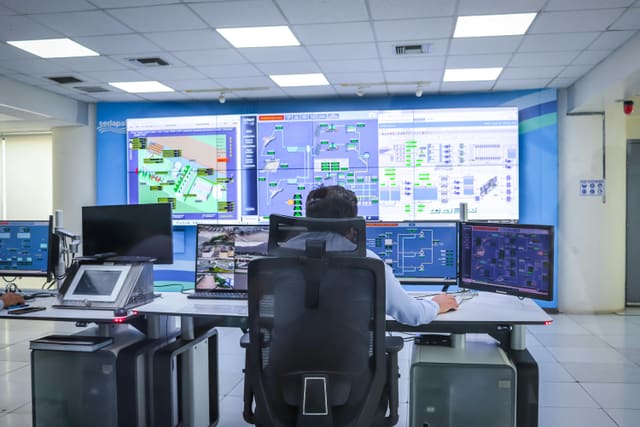
Why ERP/TAS data mismatch is the most expensive problem in your terminal
ERP and terminal automation mismatches slow invoicing, hide stock variance, and create avoidable disputes between operations and finance.
May 10, 2026 · 6 min read
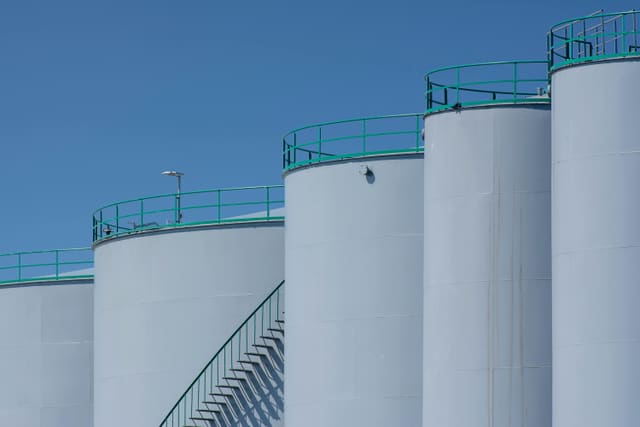
From Excel to BulkStock: a 90-day digitalization path for fuel depots not ready for full TAS
A phased path for depots moving from paper, spreadsheets, and email-based outturns to structured stock and delivery management.
May 10, 2026 · 6 min read
Talk to us
Map the operating chain before the project scope hardens.
A focused discovery call gives you a practical view of the systems, field signals, and operating handoffs that deserve attention first.
We reply within two business days.